
Where AI actually removes work.
AI and automation where they measurably reduce friction, repetition and information overload — pragmatically delivered, not as another chatbot feature.
The situation
AI is expected everywhere — but most projects fail not at the model, but at an unclear process and poor data quality. Another chatbot rarely solves the actual problem.
- Recurring, manual work ties up time that's missing elsewhere.
- Knowledge and information are scattered and hard to find.
- “AI” hangs in the air as an expectation, without a clear, value-creating use case.
From workflow to real relief
- Workflow
- Analyze
- Automate / AI
- Integrate
- Measure
- Manual copy-and-paste chains
- Documents nobody oversees anymore
- Recurring evaluations
- Searching instead of finding
- The same questions asked over and over
The approach
Process first, technology second. Automation handles the repetitive, AI handles what needs interpretation. The result is less friction — not another tool that has to be explained.
- Classic automation where it's more reliable and cheaper.
- AI where interpretation, language or patterns are involved.
- Traceability instead of a black box — people stay in control.
What changes
Instead of
- Manual, recurring work
- Painstakingly gathering knowledge
- An AI feature with no benefit
- Opaque automations
- Tools nobody uses
You gain
- Automated workflows that run reliably
- Fast access to distributed knowledge
- AI support with a clear purpose
- Traceable, controllable results
- Time for work that genuinely matters
Capability areas
AI-assisted workflows
Workflows where AI takes on exactly the step that needs interpretation or language.
Process automation
Reliably automating recurring, rule-based workflows — where classic logic is enough.
Knowledge & document access
Making distributed knowledge searchable and answers from documents reliably retrievable.
Internal AI tools
Tailored internal tools instead of generic chatbots — grounded in your context.
Decision support
Preparing signals and patterns so people decide faster and with more confidence.
AI-enabled interfaces
Interfaces that embed AI support meaningfully — understandable and controllable.
Cooperation models
Use-case check
One workflow, one honest assessment: automation, AI or both.
Pilot / prototype
A focused use case as a working prototype with measurable effect.
Build & integration
From prototype to a productive, integrated solution including handover.
Related services
Automation
Less manual work, more time for your business. I automate processes and connect website, email, CRM, calendar and AI.
Anomaly & Trend Detection
This module identifies meaningful anomalies, pattern breaks, and emerging trends that indicate risk or opportunity.
Documentation & Knowledge Systems
This module establishes systems to capture design rationale, assumptions, insights, and learnings in a structured, searchable way.
Transparency & Explainability Models
This module creates structures that make data use, decision logic, and system behavior understandable, even in AI-driven products.
Event & Tracking Design
Tracking starts in understanding user actions, decisions, and uncertainty.
Product & Platform Analysis
This analysis treats the product not as an isolated artifact, but as a coherent system of goals, user groups, features, technical constraints, and organizational dependencies.
Selected work
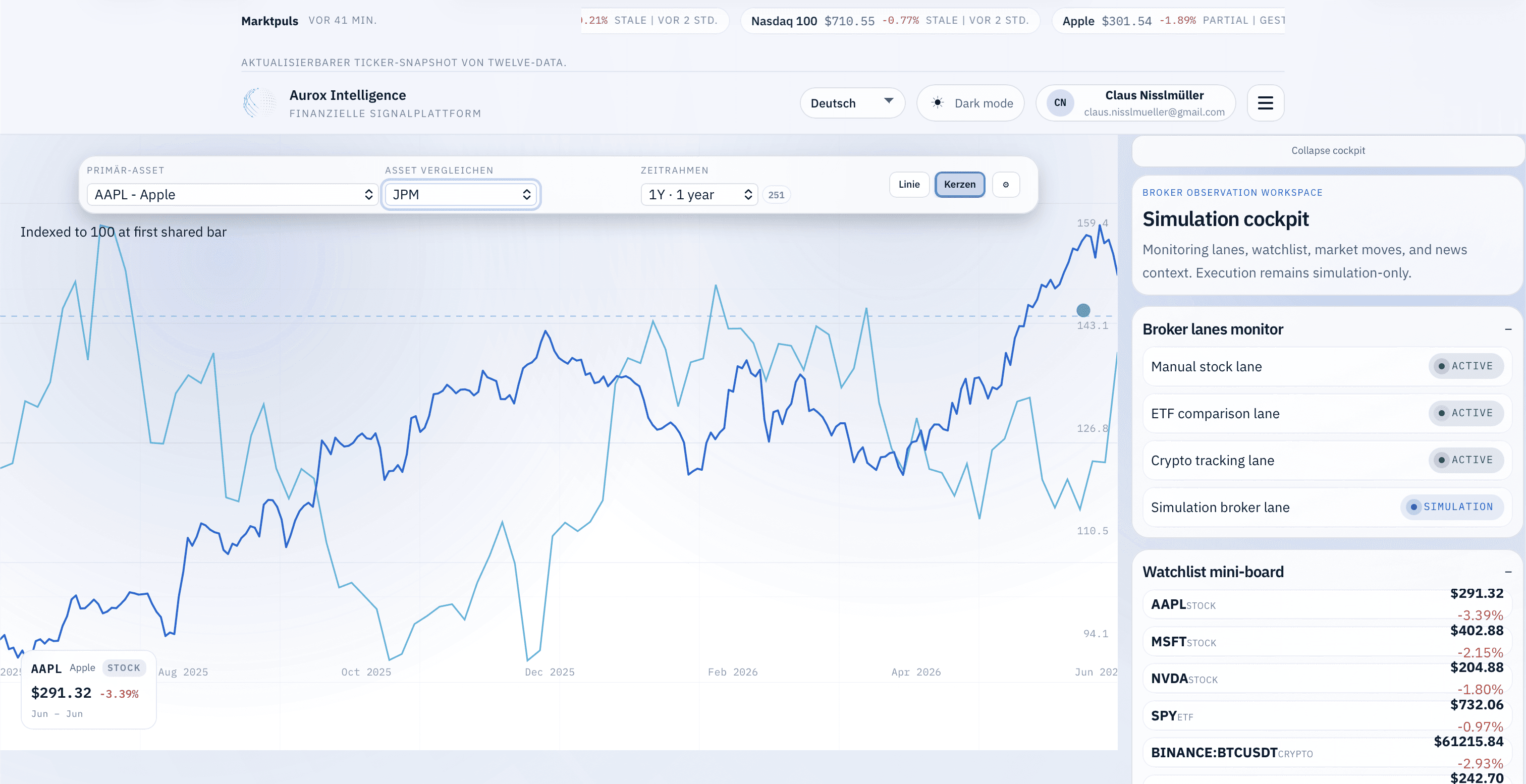
Aurox Intelligence
Simulation-first Financial Intelligence for Transparent Decision Making.
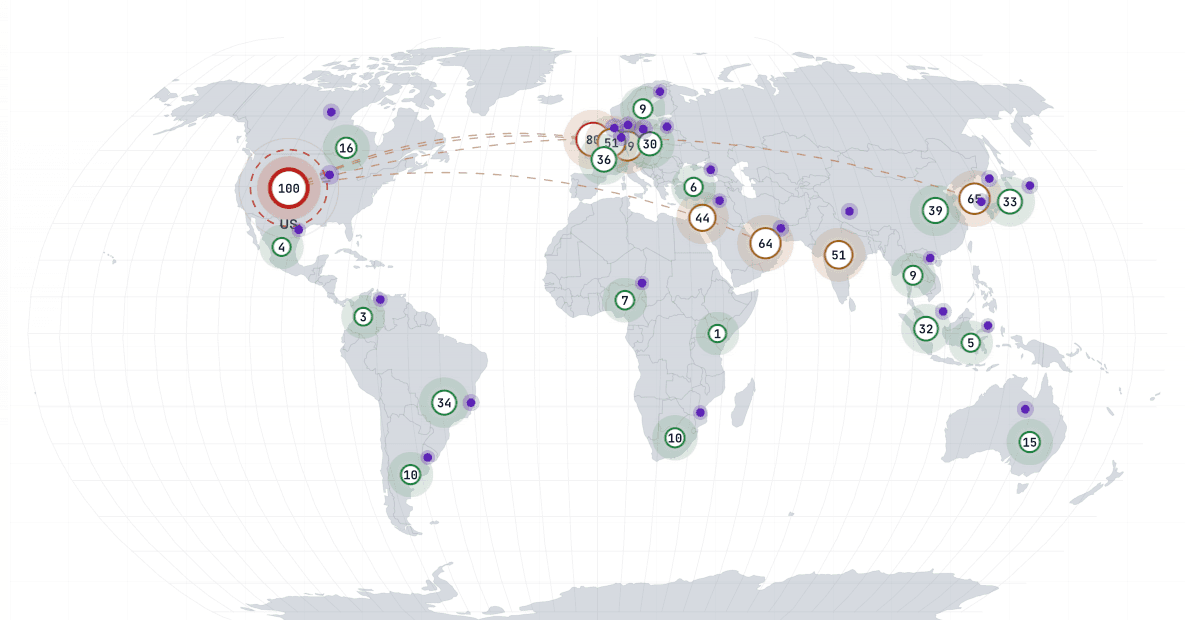
Observa – Geo-Political Observability
An experimental intelligence platform that connects regional events, cyber intelligence, environmental data, and operational awareness into one explainable observability workspace.

Sixfold OS
The operating system for product maturity.
How collaboration works
- 01
Understand the workflow
Capture the real process, its effort and the data situation.
- 02
Choose the approach
Decide honestly: automation, AI or a combination.
- 03
Build a prototype
Make a focused use case work and measure it.
- 04
Integrate
Embed it in existing systems and workflows, traceable and safe.
- 05
Measure & hand over
Verify impact and hand over documented.
Direct answers
Workflows where AI takes on a concrete step — processing documents, retrieving knowledge, structuring content or preparing evaluations. Always embedded in a real process.
No. A chatbot is just one of many forms. Often the greater value happens in the background — through automation, processing and preparation nobody perceives as an “AI feature”.
Often yes — partly classic automation, partly AI-assisted. What matters is whether the process is recurring enough and the data situation is sufficient. We assess that honestly up front.
Not necessarily. What matters is data quality, not data volume — and a clearly defined use case.